The Fool doth think he is wise, but the wise man knows himself to be a Fool.
Shakespeare, As You Like It
The wisest of all, in my opinion, is he who can, if only once a month, call himself a Fool — a faculty unheard of nowadays.
“Bobok : From Somebody’s Diary” translated by Constance Garnett in Short Stories (1900) Dostoyevsky
Kiss me and go, I was a Fool for you, ahh…
Kiss me and go, you were a Fool it’s true, ahh
Rain Over London, Charli xcx
What kind of fool are you?
I am pleased to say that over the course of his prolonged time in this mortal realm, the Director has many and oftentimes been called a Fool. In today’s paltry offering, I thought we might look more closely at the whole business of what it means to be a Fool. The Fool is often regarded as a character of mere whimsy, best ignored, but I think we dismiss them at our peril.
You know how the Director likes his Latin… well the words ‘folly’ and ‘Fool’ come from the Latin word “follis”, which means, amongst other things, a pair of bellows. The job of bellows is to expel empty air, which if extended to people, implies an empty-headed person casting about similarly empty words. However bellows also provide the oxygen needed for combustion. The job of the Fool then is in some ways to ignite us or, to paraphrase The Rolling Stones, to ‘start us up’.
In 1511 Dutch scholar Erasmus published Stultitiae Laus or Moriae Encomium, often translated as In Praise of Folly. It is a multi-layered satirical piece but also a profound exploration of the role of the Fool. I recommend it to my reader. In the essay, Folly introduces herself, and since nobody ever praises her, she begins by praising herself, arguing that life would be dull without her. She takes a fairly critical swipe at pretty much everyone and points out how important she ought to be in all aspects of life but too often isn’t. Marriage and friendship for example, should contain a certain amount of folly to help us overlook the defects of our friends and loved ones.
Philosophers don’t escape her foolish gaze either. At one point she compares them to theatre critics who unmask the characters onstage and ruin the actors’ performance, suggesting that’s quite annoying as well as missing the point. We need our figments of imagination. She points out that the Philosophers in their quest for wisdom don’t seem to understand how the illusions that help make life bearable are really useful even if they do distort reality. The Fool, on the other hand, is infinitely freer and happier than those who are burdened by the baggage of that kind of wisdom.
In essence, Folly’s argument is that there is nothing that can make life happier than the joy that accompanies laughter and play. Folly is not merely universal, but necessary and even desirable to humanity. To be a person is nothing other than to play the Fool, and to acknowledge this fact is the highest form of the right kind of wisdom. The greatest Fools are often cleverer than the people who laugh at them. In fact, the great secret of the successful Fool is that they are no ‘fool’ at all.
Without the Fool’s blunt observations and playfulness, our inner landscape is also in danger of becoming a sterile wasteland. It is no wonder that Hamlet who has ‘lost all mirth’ remarks,
How weary, stale, flat and unprofitable,
Seem to me all the uses of this world!
In Court traditions the Fool was the one person able to ridicule the very person he served. To make his special privileges known, the Fool imitated the king’s crown and sceptre with a cap ‘n’ bells and a bauble, or Fool’s sceptre. While courtiers and advisers carefully measured their words to avoid giving offence, the Fool used humour as a subversive tool through clever word play, satirical commentary and astute observations. Where flattery often veiled reality, the Fool became a refreshing voice of honesty. The Fool’s words often served to puncture the pompous egos of rulers. In medieval times, it was believed that keeping a Fool at Court warded off the evil eye. It turns out that there’s a profound truth in this custom. We ought to make room for the renegade factor in ourselves and admit them to our own inner court, where they can bring us fresh ideas and new energy.
In Shakespeare’s King Lear, as you know, the king’s relationship with the Fool is a poignant one of friendship and dependency. It is, of course only when Lear becomes a Fool himself that any kind of self knowledge, understanding and redemption becomes possible.
I think we have a little time, so let us talk of the Clown and the Trickster. They share similar traits. They are sources of humour, often eliciting laughter, and serving as catalysts for some kinds of comic catharsis. But they’re not the same. Let’s take Clowns first.
As Danish theologian and philosopher Søren Kierkegaard pointed out, what may seem like a joke, can in fact be a warning:
A fire broke out backstage in a theatre. The Clown came out to warn the public; they thought it was a joke and applauded. He repeated it; the acclaim was even greater. I think that’s just how the world will come to an end to general applause from wits who believe it’s a joke. (Either/Or, Part I)
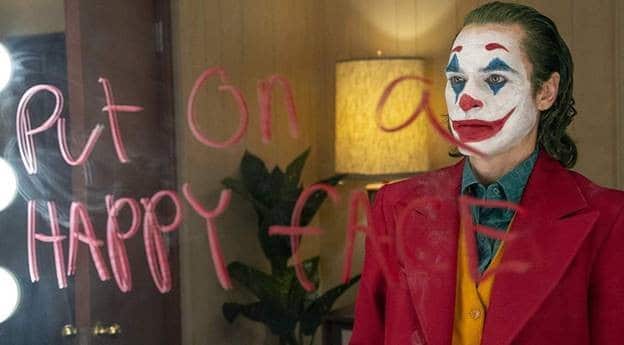
The Clown therefore can bring a sense of awareness to what is going on in the world, and where we are headed. Many of them, however, come from a place of tragedy as they are a person who has to sacrifice their well-being by always having to put on the same face, and play the same character. This one-sidedness can take its toll mentally, and in this case, the Clown can slowly become enveloped by their shadow; the dark side of their personality. The evil Clown archetype is known to us as the figure of The Joker, in the Batman universe.
In medieval theatre, Clowns would not only make spectators laugh, but sometimes also snatch them off with them into a Hellmouth, the entrance of hell envisaged as the gaping mouth of a monster. Thus, their light and dark sides were balanced.
When it comes to the figure of the Trickster, there are a few very important psychological differences to the Fool. Generally speaking, the Fool is presented as an innocent or naïve figure, while the Trickster is intentionally deceptive, and seeks to trick others and laugh at them. The Trickster loves engaging in what the Germans call schadenfreude (“harm-joy”), in which one obtains pleasure from learning or witnessing the misfortunes, failures, or humiliation of another person. A Trickster may console others when they fail, and hide that internally they feel joy. When there is an opportunity to play a trick on another person, the Trickster immediately seizes the opportunity.
The Fool, however, is not interested in laughing at a person, but rather laughing with the person, or at themselves. While the Fool likes to entertain others, and is usually the butt of a joke, the Trickster looks primarily to entertain themselves at the expense of others. When a person acts like a Fool through some kind of outward action, it is immediately apparent to the audience. With the Trickster, it is more ambiguous, he plays like a Fool in order for people to fall into a trap. The Trickster is also a villain in the Whoniverse. So there’s that.
The Fool is also an enduringly important figure in some of our most important stories. Let’s have a look at a few…
Parsifal and the Grail Myth
The myth of Parsifal (which means young or pure fool) describes what all of us have to do to become who we really are. One day, after seeing knights pass by his place, Parsifal decides to leave his mother in order to become a knight himself, and so goes off to experience many trials that initiate him into manhood.
In the story, the Grail Castle is in serious trouble, The Fisher King, the king of the castle, has been wounded. His wounds are so severe that he cannot live, yet he is incapable of dying. He is rendered infertile and his kingdom is barren. This of course expresses how the psychological wound manifests itself in problems in the external world.
Every adolescent receives his Fisher King wound. It is the graduation from naïve consciousness into self-consciousness. It is painful to watch an adolescent grow up and realise that the world is not just joy and happiness. Ask Adam and Eve. However, his first contact with a wound, is what later will be redemption in life.
Back to the story: every night there is a solemn ceremony in the Grail Castle. One of the maidens holds the Holy Grail, filled with wine, and each person that drinks from it is granted their deepest wish. The Fisher King, however, does not participate and is suffering alone. It is perhaps the deepest form of suffering, to be right in front of beauty, happiness, and holiness, but unable to partake in any of it. The court Fool had prophesied long ago that the Fisher King would be healed when an innocent Fool arrived in the court and asked a specific question.
One day, Parsifal finds a man in a boat fishing on a lake; wouldn’t you know, the fisherman is none other than the Fisher King! Parsifal asks if there’s a place to stay the night, to which the Fisher King gives him the directions to the Grail Castle. Parsifal attends the ceremony and the following day, he leaves the castle. As he turns around, the castle is nowhere to be seen. It takes many Parsifal long and painful years to find the Grail Castle again.The original myth ends here.
The point of course is that the inner castle is always really there, but appears invisible to us unless we see the world with new eyes. Many of the continued stories say that after Parsifal revisits the Grail Castle, he asks the Fisher King, “whom does the Grail serve?” Immediately, he is healed, and peace and happiness reign over the land.
The Grail symbolises the centre of meaning in human life, and the meaning of life is to serve that meaning. Jungian analyst Robert A. Johnson writes “A man must consent to look to a Foolish, innocent, adolescent part of himself for his cure. The inner Fool is the only one who can heal this Fisher King wound.”
And then there’s Don Quixote.
Here, Miguel de Cervantes portrays a man who, after reading many books of chivalry, decides to become a knight-errant under the name of Don Quixote. He rides on his weak horse, and goes on to defend the innocent, and defeat the wicked, only to do exactly the opposite. The term quixotic refers to a person who is apt to be deluded, unable to distinguish reality from imagination, and who pursues lofty and romantic ideals that are impractical. In a famous scene, the hero has an imaginary fight with windmills, which he believes are giants. Hence the term “tilting at windmills”, to mean attacking imaginary enemies.
Don Quixote has good intentions but since he is largely unable to see the world as it really is, he ends up doing harm to those he meets. Despite his madness, he is witty and at times, seemingly sane; so long as he avoids the topic of chivalry. Even the most intelligent people can fall victim to their own Foolishness.
Towards the end, Don Quixote becomes sick and falls asleep, and later awakes from a dream, awakening from his madness too. He realises that he has wasted his life, and is just mad.
The atmosphere of the novel subsequently turns from comedy to tragedy, and the people who looked at him with scorn, can’t help but feel pity for him. They begin to insist that he is wrong and that he really is a knight. What was before viewed as insanity is now considered sanity. Finally after his life-giving illusions are dissipated, he dies. He dies therefore from an overdose of reality.
Thus a question arises which all need to face; whether it is better to know the truth and be unhappy, or live in a Fool’s paradise?
In his novel, The Idiot, Dostoevsky explores this same question. The protagonist, Prince Myshkin is frank, open, and unable to hide his true feelings behind a persona in order to impress others. He says what is on his mind, regardless of the social setting. This leads people to call him an “idiot” and yet it is this idiocy which is shown in the story as the quality which can redeem the world.
Think of the fairy tales too. How often in these do we see three brothers, the youngest being a simpleton whom everybody laughs at; but it is always this Fool who becomes the hero in the story. He is the Foolhardy brother who rushes in where angels fear to tread – and by doing so wins the hand of the princess and her kingdom. The Fool seems to possess magical powers, and has Lady Luck on his side. His spontaneous approach to life combines wisdom, madness, and folly. When he mixes these ingredients in the right proportions, the results are miraculous.
I would recommend Leo Tolstoy’s story, Ivan the Fool for more insights on how the Fool is perhaps the best seen as a saviour.
But what’s all this got to do with Tiffins? Well the Director himself can often be heard up and down the corridors proclaiming, after Jung, that “The soul demands your folly; not your wisdom.” To embark on a journey of self-discovery is traditionally considered Foolish. We are supposed to follow a linear path: education, work, marriage, and so on. When a person deviates from this path, they are seen as a Fool whose adventures will amount to nothing but poverty and misery. Just ask the average Tiffinian.
The Fool however is the one that thinks of all the wonderful adventures that lie ahead, and is less worried about making mistakes. He thinks on his feet, is energetic, and urges us to live life to the fullest, while the person who thinks too much is over-cautious and remains stagnant. It is the fear of uncertainty that scares many of us, to the point of paralysis. This state of rumination and overthinking creates anxiety, and one suffers more in imagination than in reality. Just ask Hamlet.
Failure, however, can open new doors that one never imagined or expected to be open. What we think of abstractly as absolute failure may in fact lead to unimaginable success. And of course, no person has ever not failed. As my alchemist friends say, “in filth it will be found.”
The Fool is the one who has no idea what he is getting into by starting a new journey, and does not see all the trials he has to overcome, which may have prevented him from going on a journey in the first place. The Fool lives in the moment, and sees reality as it is. He is not afraid of change and exploring unknown and new territory, despite being told of its dangers.
No matter how many times he stumbles, the Fool keeps going.
In the end, it is the journey that matters, not the end (see what I did there?). As T S Eliot kind of alludes to in this bit of his Four Quartets:
We shall not cease from exploration
And the end of all our exploring
Will be to arrive where we started
And know the place for the first time.
Until next time, Happy Reading/being a Fool!
A Reader’s Tip #5
Transport woes?
Never miss your bus by carrying a “Temporary Bus Stop” sign with you at all times.